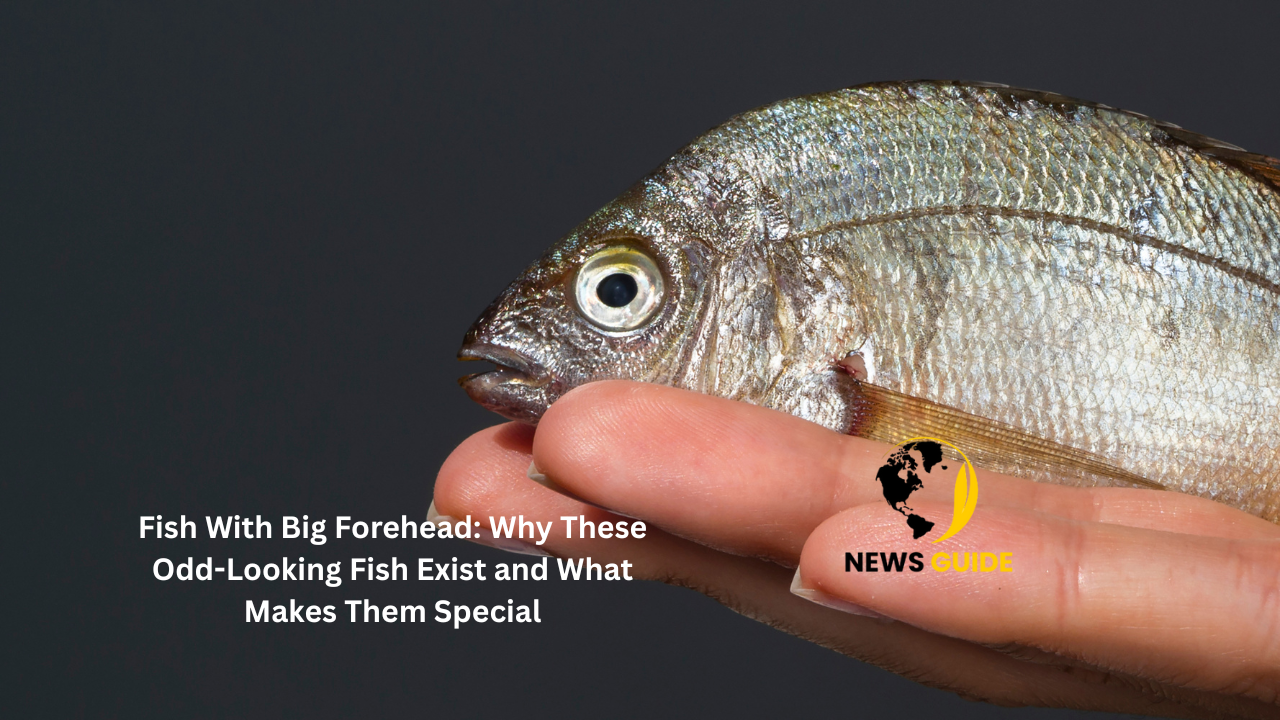
If you’ve ever looked at a fish and thought, “That forehead is huge,” you’re definitely not the only one. The phrase fish with a big forehead gets searched so often because these fish look unusual, almost expressive. Some appear tough, some look old and wise, and others seem straight out of a cartoon. But there’s a simple truth behind all of them. That big forehead is not a mistake. It’s there because it helps the fish survive.
This article is written to feel natural, clear, and human, just like a knowledgeable person explaining things face-to-face. We’ll walk through real-world examples, common questions people ask, and the logic behind these head shapes without sounding technical or robotic.
Fish With Big Forehead and Lips
When people mention fish with big foreheads and lips, they’re usually talking about fish that look heavy in the face. Thick lips paired with a large forehead give these fish a bold, sometimes grumpy appearance. In reality, those features are extremely useful.
Fish that feed on rocks, coral, or hard surfaces need extra protection around their mouths. The lips act like padding, while the big forehead supports strong jaw muscles. Over time, nature shaped their faces to handle rough feeding habits. Parrotfish are a great example. Their lips and foreheads work together so efficiently that they help turn coral into sand, shaping entire beaches without anyone noticing.
Orange Fish With Big Forehead
An orange fish with big forehead tends to stand out instantly. Bright colors draw attention, and when combined with a rounded or swollen head, the fish looks even more dramatic. In many species, orange coloring is linked to health or maturity.
Some freshwater cichlids develop both bright orange tones and enlarged foreheads as they age. The older and stronger the fish, the more pronounced these features become. What looks strange to us is actually a signal to other fish that this individual is not one to challenge.
Fish With Big Forehead Name: What People Usually Mean
When someone searches for a fish with big forehead name, it’s usually after seeing a photo, a video, or a fish in real life. They know it looked unusual, but they don’t know what it was.
Most of the time, they’re referring to well-known species like hammerhead sharks, Napoleon wrasse, flowerhorn cichlids, unicornfish, or parrotfish. Each one has a completely different reason for that forehead. Some use it to sense prey, some to show dominance, and others developed it because humans selectively bred them that way.
Ocean Fish With Big Forehead
An ocean fish with big forehead is often built for performance. The ocean is vast, competitive, and unforgiving. Fish that survive there usually have strong sensory systems and efficient movement.
Hammerhead sharks are the most obvious example. Their wide foreheads allow them to scan large areas and detect prey hidden under sand. But many reef fish also have subtly enlarged foreheads that help with balance, vision, or feeding. In the ocean, even small advantages can mean the difference between eating and being eaten.
Big Fish With Big Forehead
A big fish with a big forehead often didn’t start that way. In many species, the forehead grows larger with age. As the fish gets bigger and stronger, the head thickens, bones are reinforced, and muscles expand.
This is common in large reef fish and certain sharks. To other fish, a large forehead often means experience. It signals strength, dominance, and survival skills built over the years.
Ugly Fish With Big Forehead: A Human Misunderstanding
The term ugly fish with a big forehead says more about human taste than about the fish itself. Humans tend to label anything unfamiliar as ugly. Bulging heads, uneven shapes, and thick skin feel strange to us.
In nature, those same features usually mean success. A big forehead might protect the brain, anchor strong jaws, or improve sensing ability. These fish aren’t ugly. They’re perfectly designed for the lives they live.
Gold Fish With Big Forehead
A gold fish with a big forehead is most often seen in decorative ponds or aquarium varieties. Certain goldfish are bred specifically to develop a rounded head growth. Many people find this feature beautiful and calming.
Unlike wild fish, these foreheads exist mainly because humans chose them. While they don’t serve much of a survival purpose, they require careful care. Clean water and good nutrition are essential to keep these fish healthy.
Blue Fish With Big Forehead
A blue fish with a big forehead is common in tropical oceans. Blue coloring blends well with open water and coral reefs. When paired with a pronounced forehead, the fish looks powerful and confident.
Unicornfish are a great example. Their blue tones and horn-like foreheads make them easy to spot, yet perfectly suited for reef life. The forehead helps with feeding and social recognition.
White Fish With Big Forehead
A white fish with a big forehead often looks almost unreal. Pale coloring highlights head shape, making the forehead appear even larger. These fish are commonly found in deep water, low-light environments, or aquariums.
Because there’s little color to distract the eye, every curve of the head stands out. This makes their appearance especially striking to humans.
Green Fish With Big Forehead
A green fish with a big forehead is usually adapted for algae-rich habitats. Green helps them blend in, while the enlarged forehead supports constant feeding.
These fish often spend all day grazing. Without them, algae would quickly take over reefs and freshwater systems. Their big foreheads quietly support the work that keeps ecosystems balanced.
Saltwater Fish With Big Forehead
A saltwater fish with a big forehead often depends on that structure for sensing, feeding, or social signaling. Saltwater environments are complex and competitive, which explains why so many dramatic head shapes evolved there.
From sharks to wrasse, the ocean is full of fish whose foreheads tell a survival story.
Fish With Big Forehead and Teeth
A fish with a big forehead and teeth usually means serious jaw power. The forehead provides space for muscles that drive strong bites.
Parrotfish are a perfect example. Their teeth scrape coral, and their forehead supports that constant pressure. Without fish like them, reefs would slowly collapse.
Tropical Fish With Big Forehead
A tropical fish with a big forehead lives in warm, colorful waters where visibility matters. Head size, color, and shape all send signals to other fish.
In these environments, a big forehead can influence mating success, territory control, and group behavior.
Freshwater Fish With Big Forehead
A freshwater fish with a big forehead is often seen in rivers, lakes, or aquariums. In some species, the forehead grows naturally. In others, humans encouraged it through selective breeding.
Flowerhorn cichlids are well known for this trait. Their large foreheads are linked to dominance and genetics.
Koi Fish With Big Forehead
A koi fish with a big forehead is admired for its calm presence and rounded head. In koi culture, a broad forehead is associated with age, strength, and beauty.
These fish aren’t bred for survival. They’re bred for peace, balance, and visual harmony.
Black Fish With Big Forehead
A black fish with a big forehead looks especially bold because dark colors emphasize shape. Shadows make the forehead appear larger and more dramatic.
These fish often live in deeper or darker environments where visibility is limited.
Fish With Big Forehead Cartoon
A fish with a big forehead, a cartoon character, feels familiar because animators borrow from real life. Large foreheads make characters expressive and memorable.
Nature provided the original designs long before animation ever existed.
Yellow Fish With Big Forehead
A yellow fish with a big forehead is common on coral reefs. Yellow stands out, helping fish communicate and maintain territory.
The forehead supports feeding and strength, while the color ensures visibility.
Parrot Fish With Big Forehead
A parrot fish with a big forehead is one of the most important fish on a reef. Its head supports powerful jaws that grind coral into sand.
Without parrotfish, many beaches and reefs would disappear over time.
Final Thoughts
The idea of a fish with a big forehead often starts as a joke or a surprise. But once you understand the reasons behind it, that forehead becomes a symbol of survival, strength, and adaptation.